At homeFrom the archive
Habit trackers we tried
Over the years we made simple checklists to help our children build Islamic habits. Here are four, including one that Hilwaa tried and that never went further.
Over the years we made many small templates to help our children build Islamic habits and do them more often. Most were simple, fun checklists that a child could tick through every day. We tested each one with our children. Not all of them lasted. Here are four of them.
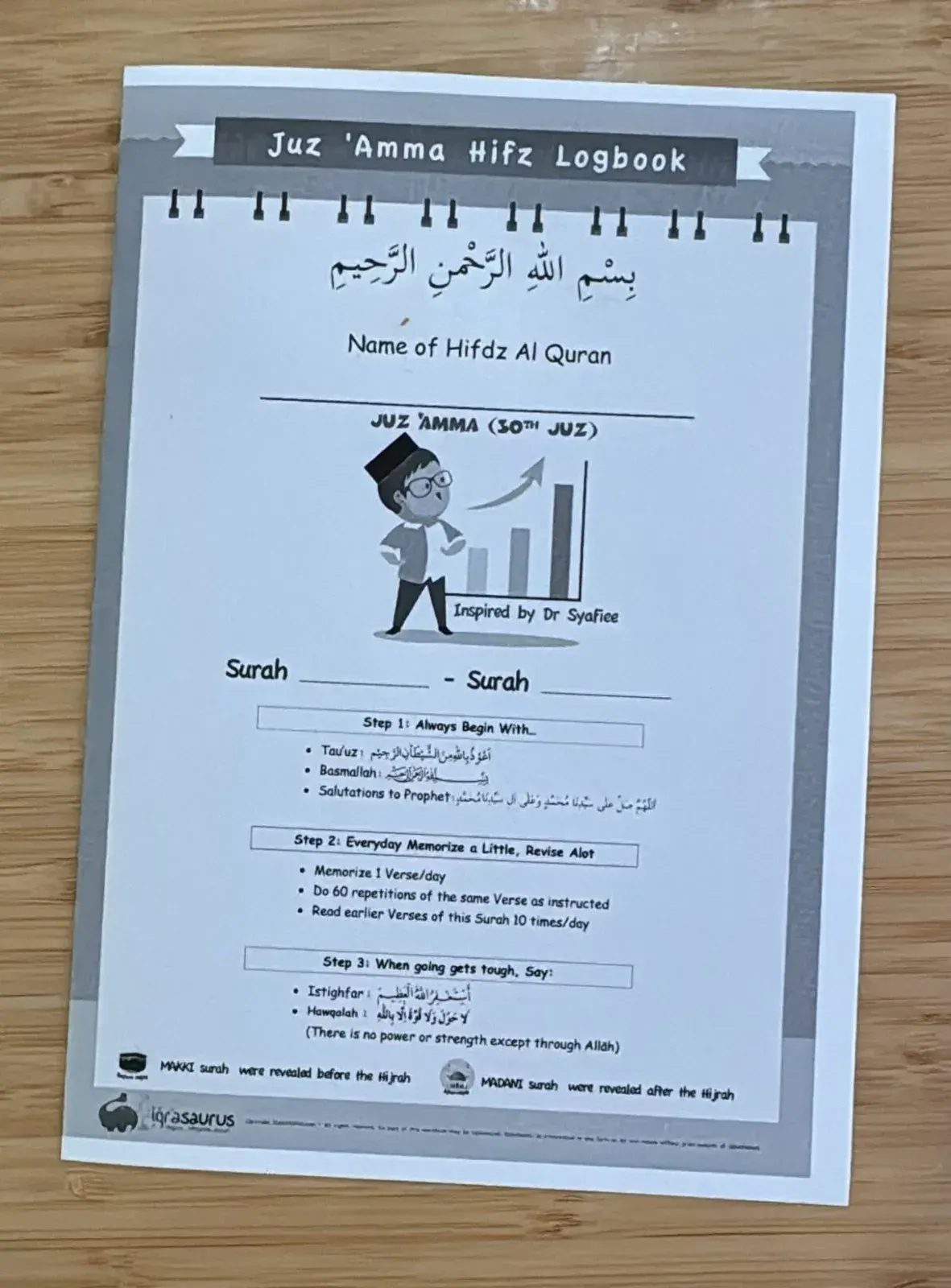
The Juz 'Amma Hifz Logbook
This logbook is built on the method of Dr Syafiee, our teacher and mentor. You read a verse five times with your eyes open and five times with your eyes closed, in turns, until you have read it 25 times, and then you do the same with chunks of lines. At a basic level it is 20 to 25 repetitions, and it can be ramped up to 60, which is the number printed on the logbook.
The cover sets out three steps: begin with ta'awwudh, basmalah and salawat; memorise a little every day and revise earlier verses; and when it gets tough, say istighfar and hawqalah. A key at the bottom shows which surahs are Makki and which are Madani. This logbook later grew into our Hafiz tool.
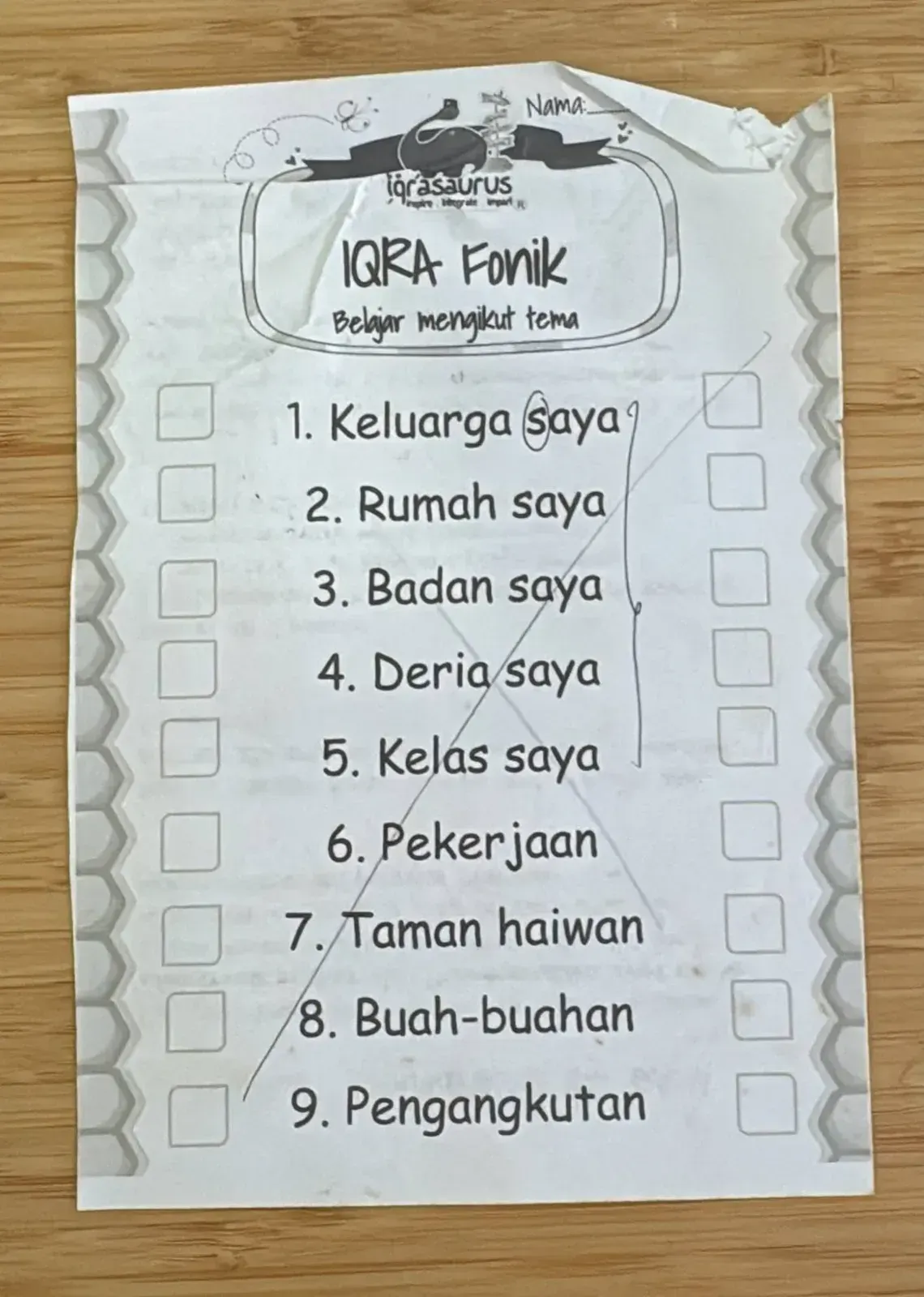
Iqra Fonik
Iqra Fonik is a checklist in Malay for learning by theme: Keluarga saya (my family), Rumah saya (my house), Badan saya (my body), Deria saya (my senses), Kelas saya (my class), Pekerjaan (jobs), Taman haiwan (the zoo), Buah-buahan (fruit) and Pengangkutan (transport). Each theme has a box on either side to tick. The copy we kept is crossed through.
A 30-day tracker
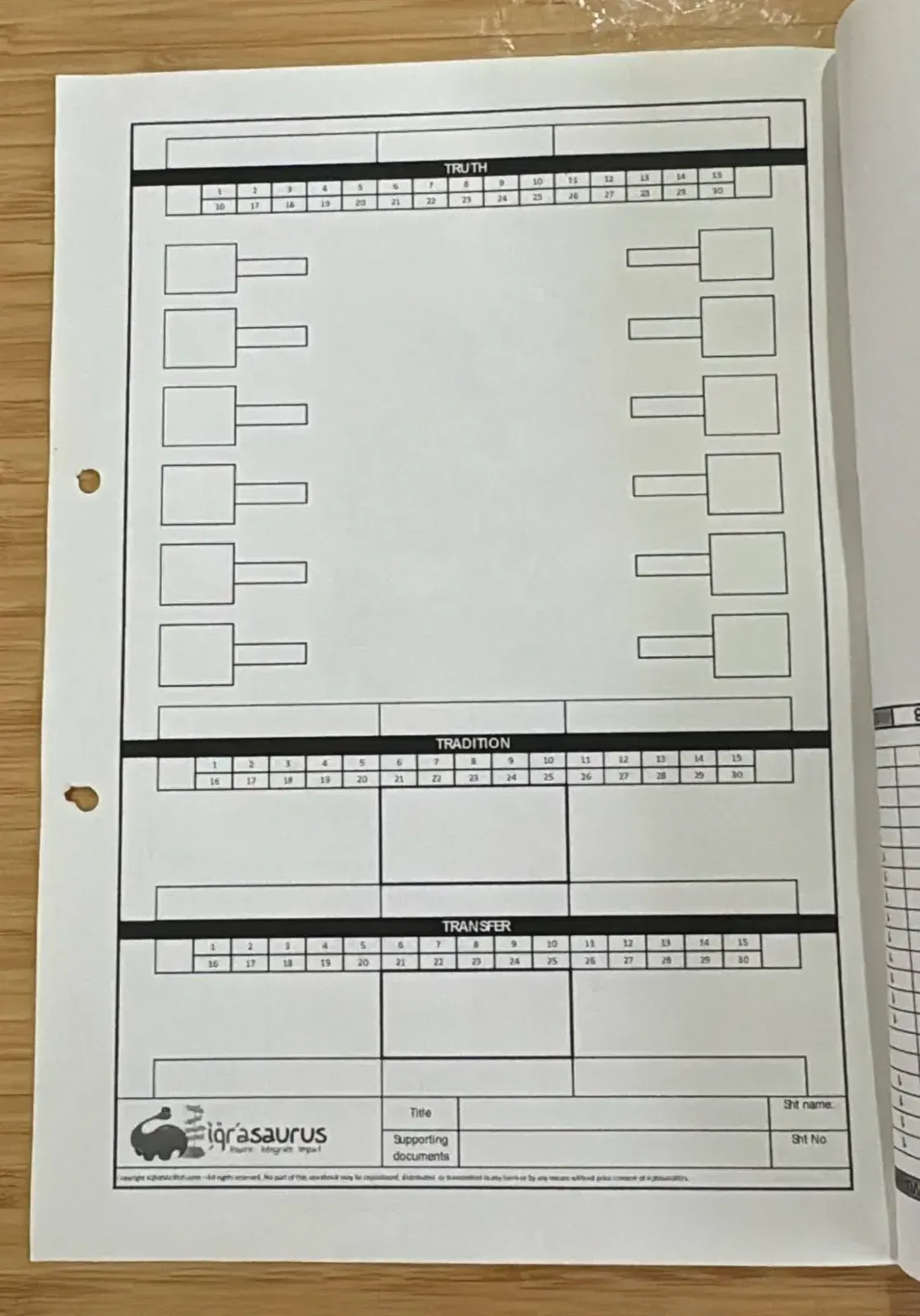
This sheet has three bands, Truth, Tradition and Transfer, each with the days numbered 1 to 30. At the bottom are boxes for a title, supporting documents and a sheet name.
Hilwaa's road to Al-Kafiroon
This one was Hilwaa's attempt to memorise Surah Al-Kafirun with Dr Syafiee's 5-5 method, in a different format that we charted out as a journey. A road winds down the page in three stages. At "Start here" you read the verse while looking at it and shade a Ka'bah for every read. At "Continue here" you read it five times looking and five times not looking, shading a figure for every read. At "End here" you repeat the previous verse together with the new one. The icons were picked to reflect the surah.
Each stage has a "Checked by" line. Her big sister Nurin did the checking, and a comment was added at the second stage: "Hilwaa is very excited but is not able to hafal Ayat 3".
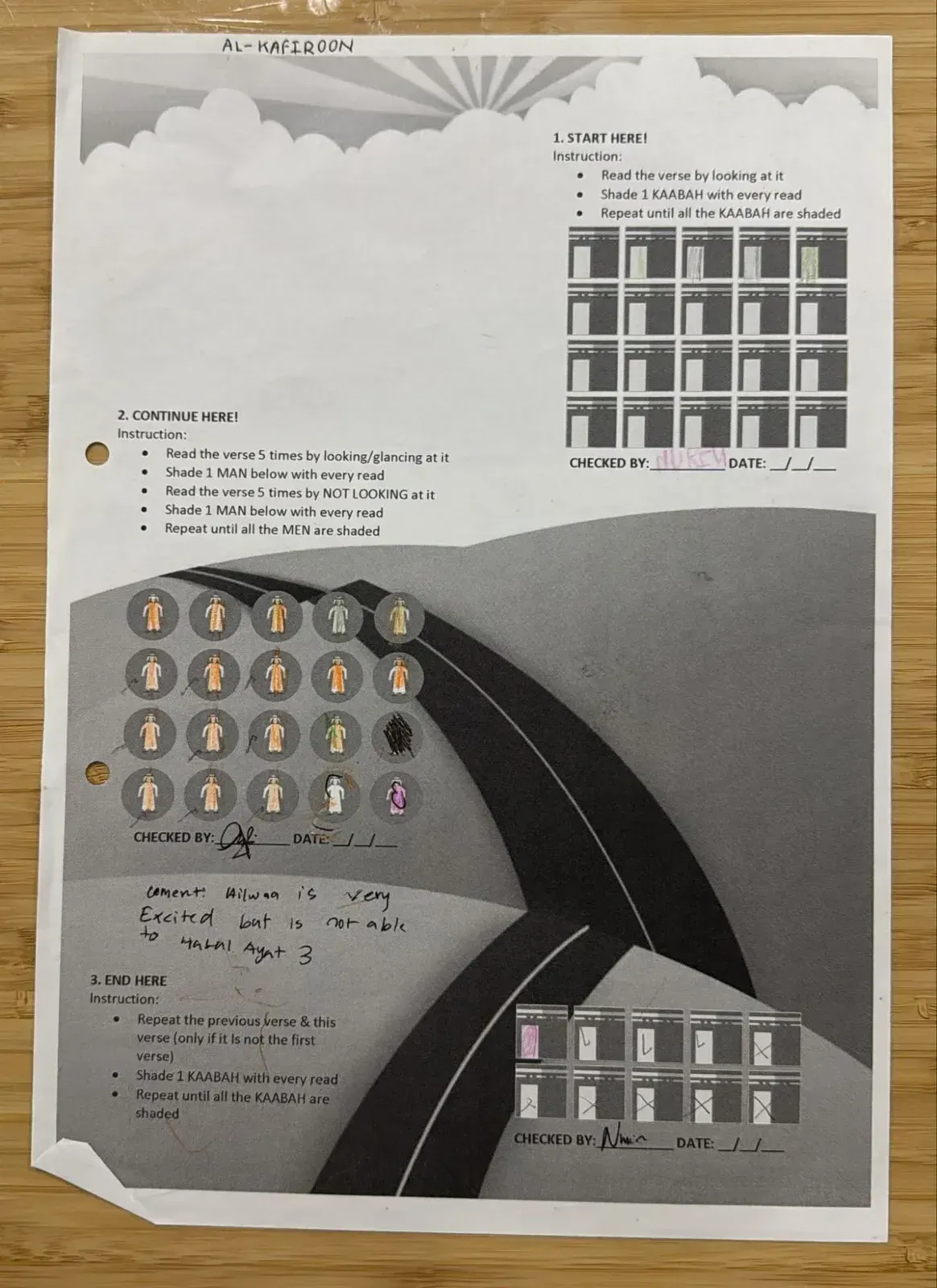
This tracker never went further than this page. It was one of our many tries at finding a memorising format that would interest our children and stick with them.
If you make one for your own child, try it for a week or two and watch which part they enjoy. Keep that part, and let the rest go.