At homeFrom the archive
Moon phases with biscuits and a paper-plate clock
When Hilwaa was a toddler, science happened at home with whatever we had: sandwich biscuits for the moon, a paper plate for a clock and cardboard tubes for a ball run.
When Hilwaa, our third child, was a toddler, a lot of our science happened on the table at home, using whatever we had. These photos are from those years, around 2012 to 2014.
The moon on a plate
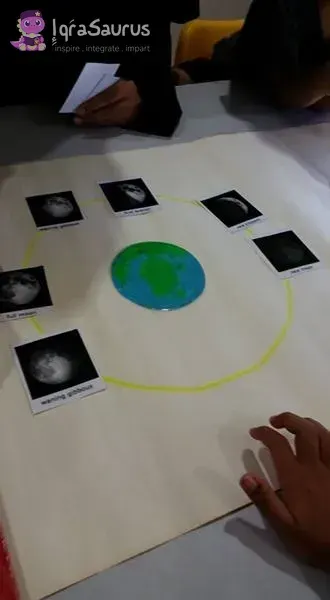
We wanted the children to see why the moon looks different from night to night. First we made a big chart: a hand-drawn Earth in the middle of a large sheet, a yellow line for the moon's path, and picture cards of the phases laid around it.
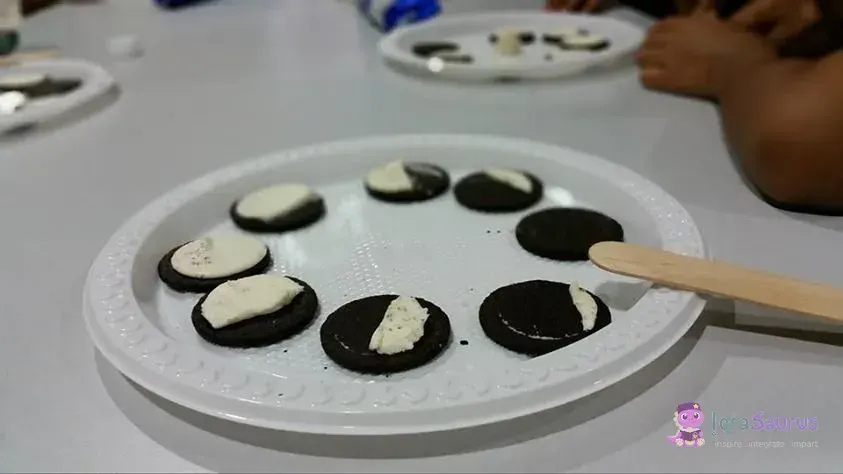
Then came the biscuits. The children opened sandwich biscuits and scraped away some of the cream with a wooden stick, until the plate showed the moon going from new to full.
Today this kind of activity sits under what we call science Tadabbur: looking at the moon and the crescent, the sky, plants and time as signs from Allah.
A clock with two sets of numbers
The Arabic clock is a paper plate. The numerals are written in Arabic around the edge, and the hands are cut from orange and green foam and fixed with a split pin. By one of the numbers is a little flap. Lift it, and the familiar 3 is written underneath in red, so a child can check.
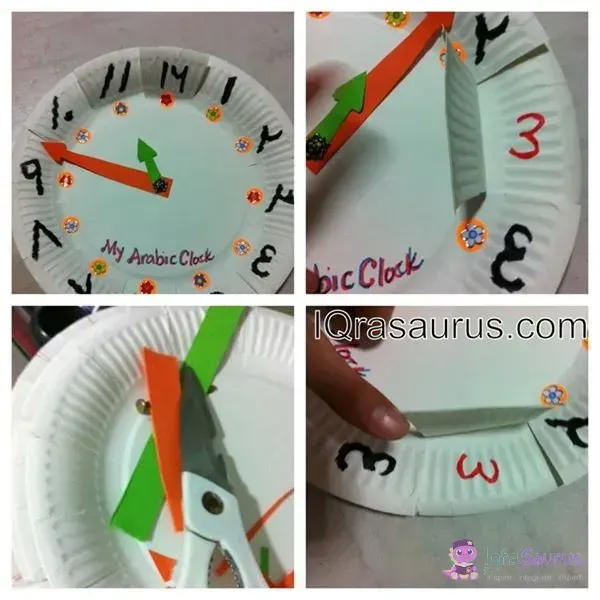
We link clocks and time to Surah Al-'Asr.
A ball run from the recycling
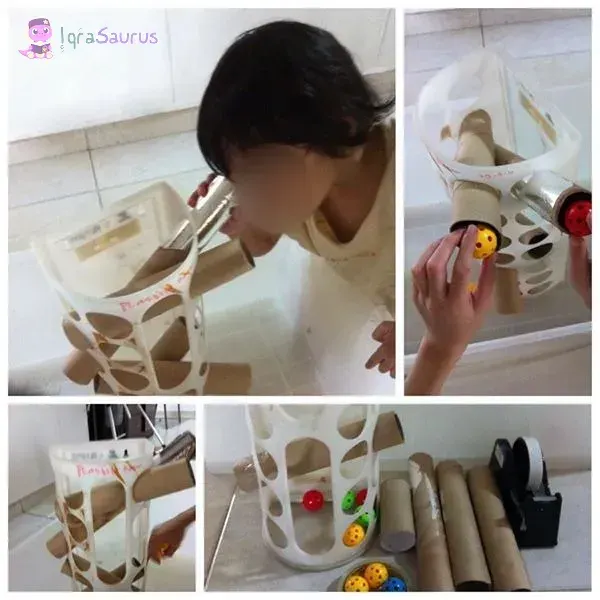
The ball run is cardboard tubes taped inside a plastic bag holder. Coloured balls go in at the top and drop from tube to tube. In the photos Hilwaa peers through a tube to see where the ball has gone.
Clouds, rivers and plants
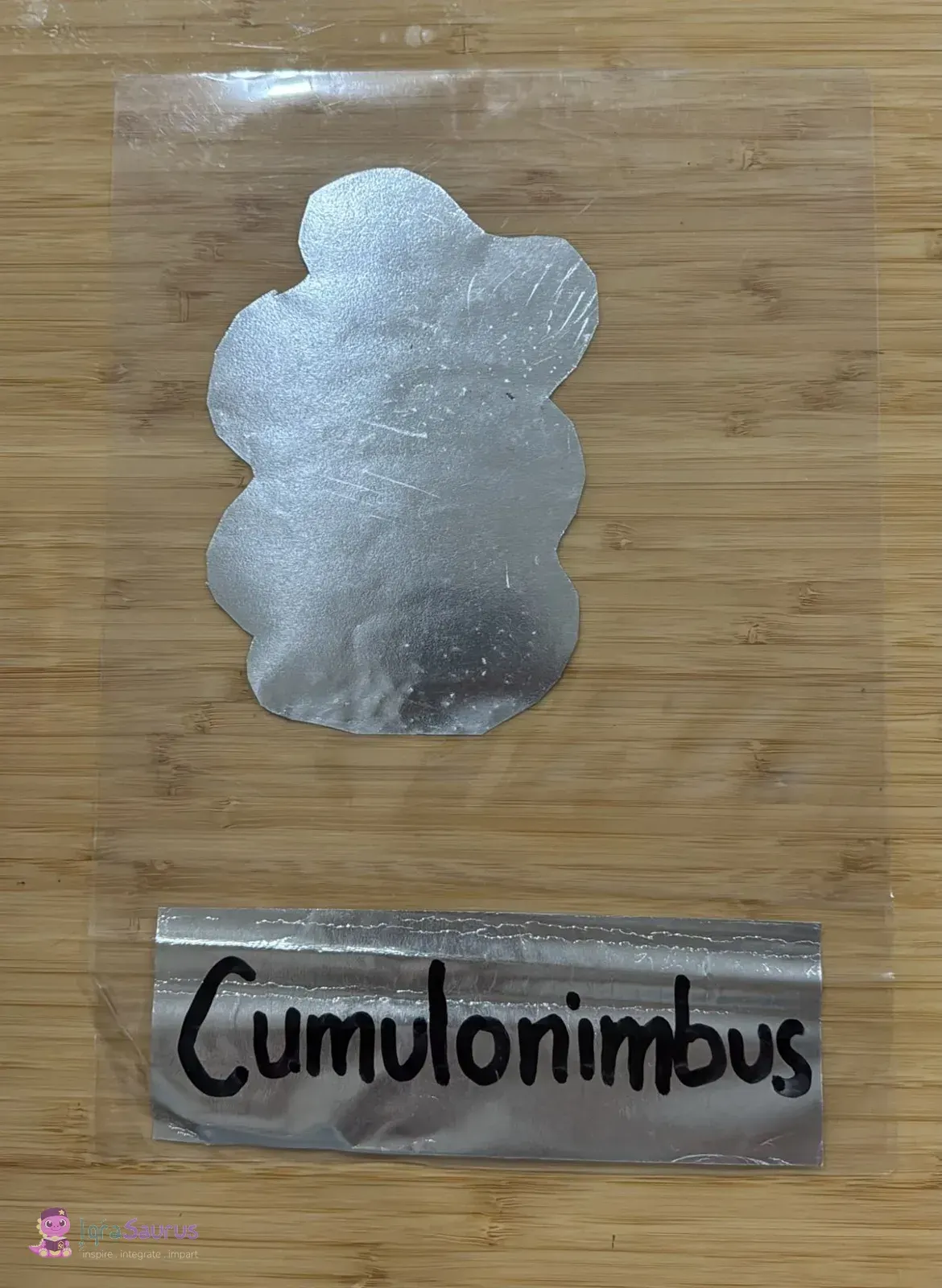
Clouds were among our first steps into science. One piece from our cloud series is a cumulonimbus cloud, cut from silver foil and labelled by hand.
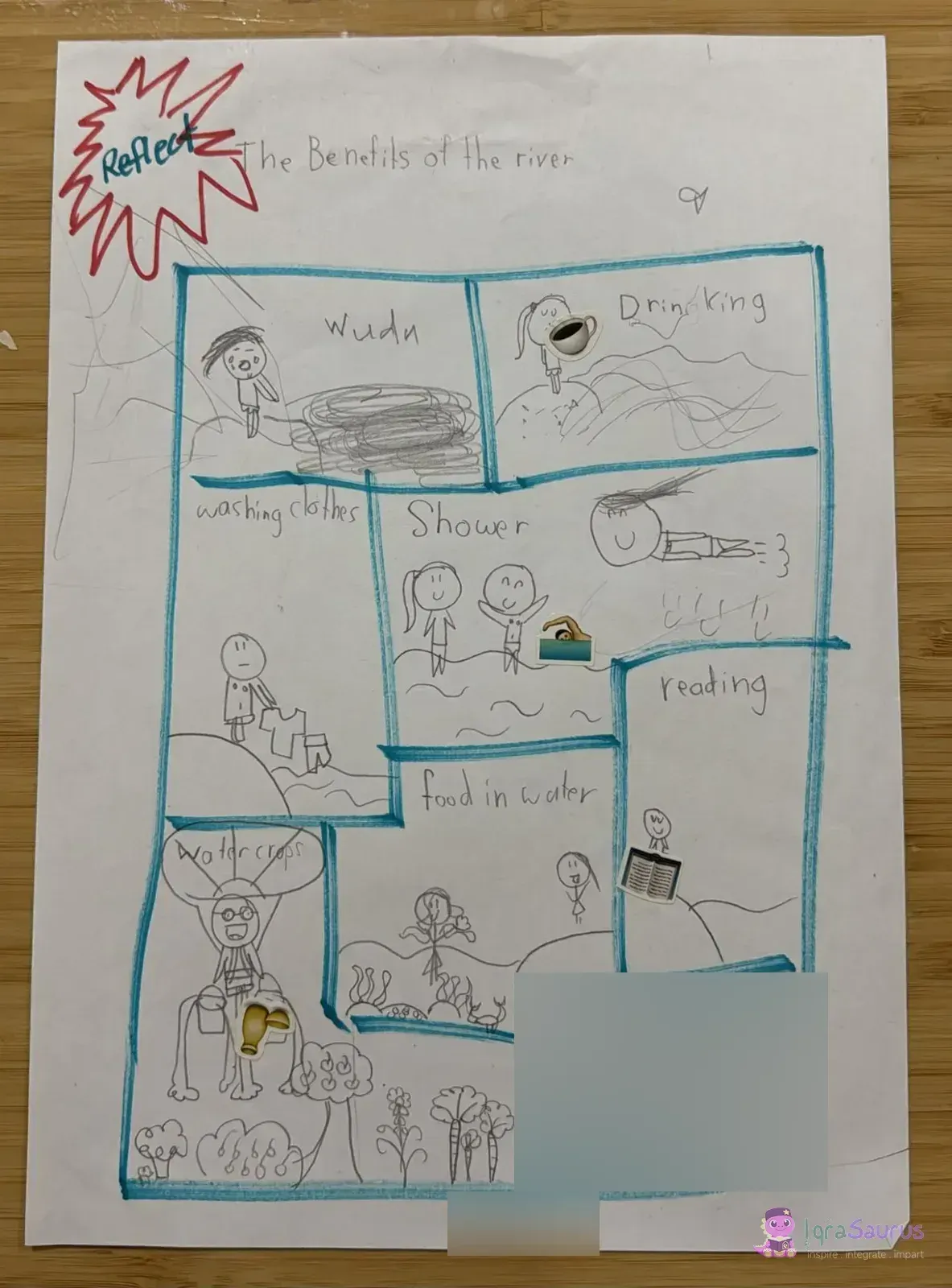
Hilwaa also drew "Reflect: The Benefits of the river", a comic with a panel for each use of water she could think of: wudu, drinking, washing clothes, a shower, reading, food in water and watering crops. This is Integrate in the 4-I: taking what we have learned and finding it in a child's own day.
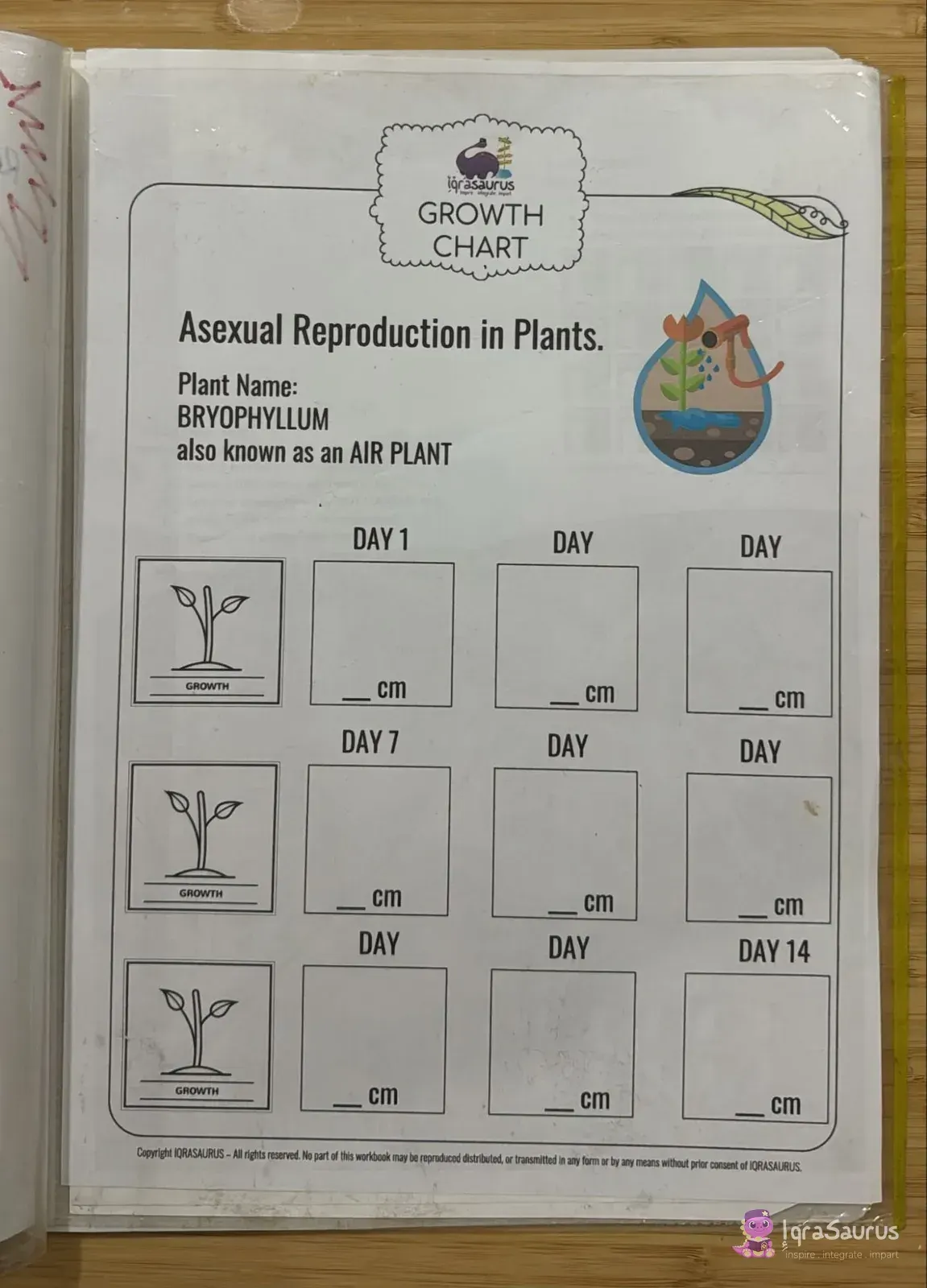
We made growth charts too. This one is for a lesson on asexual reproduction in plants, using Bryophyllum, also known as the air plant, with boxes to measure it from Day 1 to Day 14.
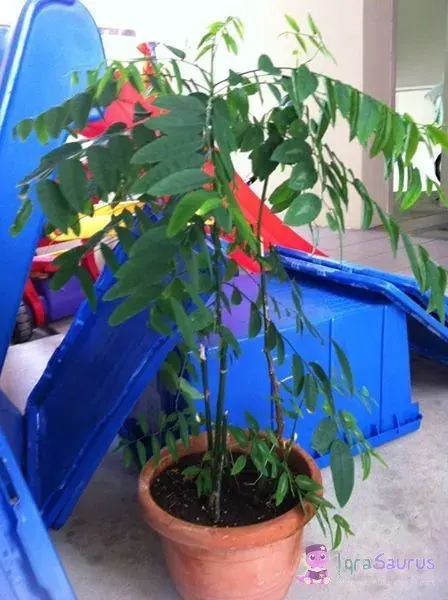
Plants were part of home as well. A young curry leaf plant grew in a pot beside the children's slides.
For parents
None of this needed special equipment: a packet of biscuits, a paper plate, some tubes from the recycling and a plant in a pot. In Investigate, we look at what Allah has made, compare it with what people make, and talk about the difference. Science does not prove that Islam is right. It is one of the many signs Allah has shown us.