At homeFrom the archive
Notes, mind maps and doodles in the margins
Syauqi's geography journal and his Design and Technology mind maps: how one of our children thinks on paper.
Our children think on paper. Not every page is neat, and not every idea is fully captured. Most of what they write comes with a conversation about it, or a project that grows out of it.
All four children stopped homeschooling after primary school. These pages are from Syauqi's secondary school years. We keep them because they show how he works things out: writing, mapping, doodling and asking questions.
A geography journal
In 2018 and 2019, Syauqi kept a spiral journal for lower-secondary geography. It even has a doodle page.
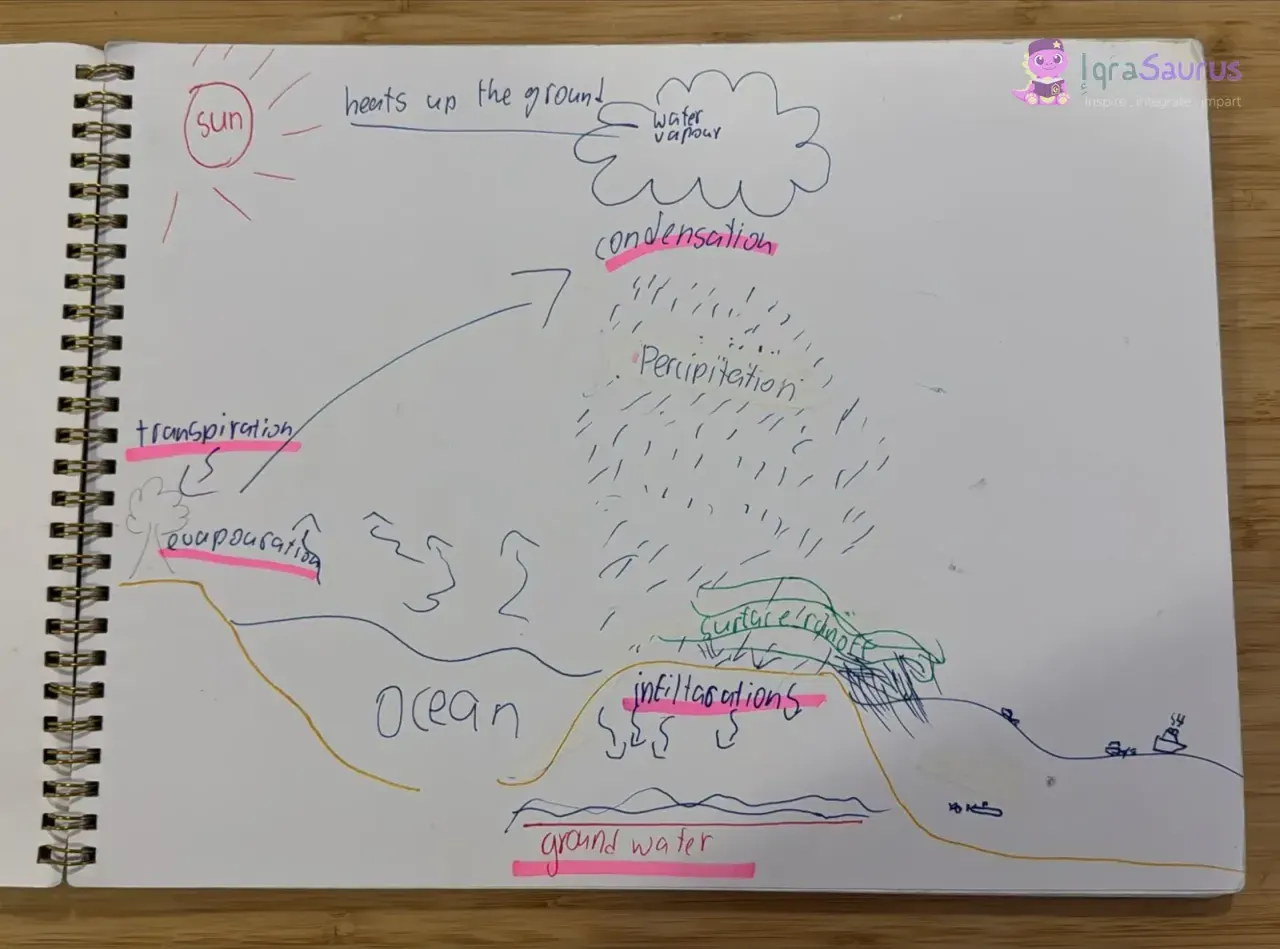
The water cycle became a drawing first: the sun, a cloud, rain falling on the land and the ocean, with labels such as evaporation, transpiration, condensation and precipitation highlighted in pink.
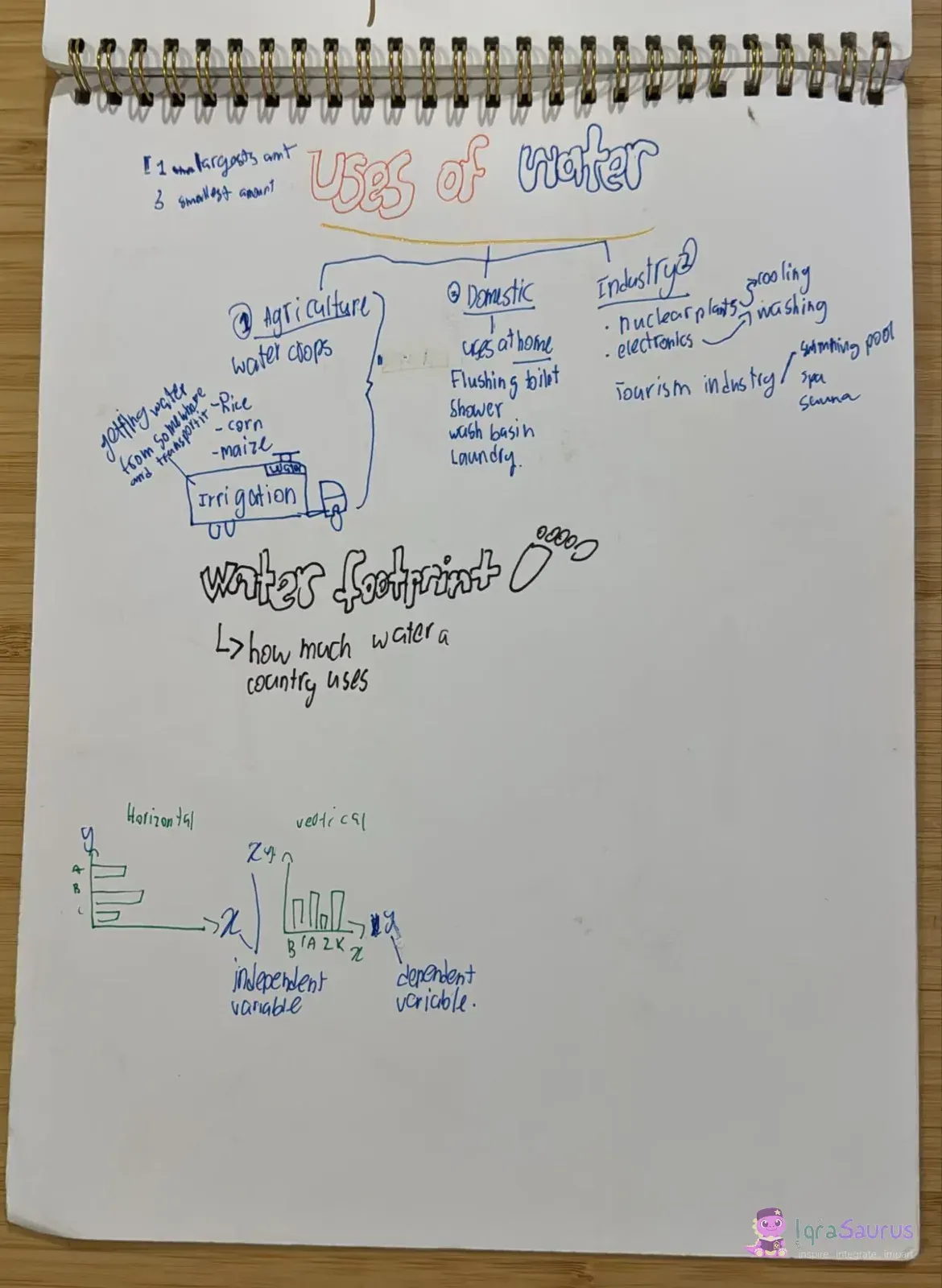
"Uses of water" became a mind map in bubble letters, branching into agriculture, domestic use and industry, with a note on what a water footprint is and two small bar graphs.
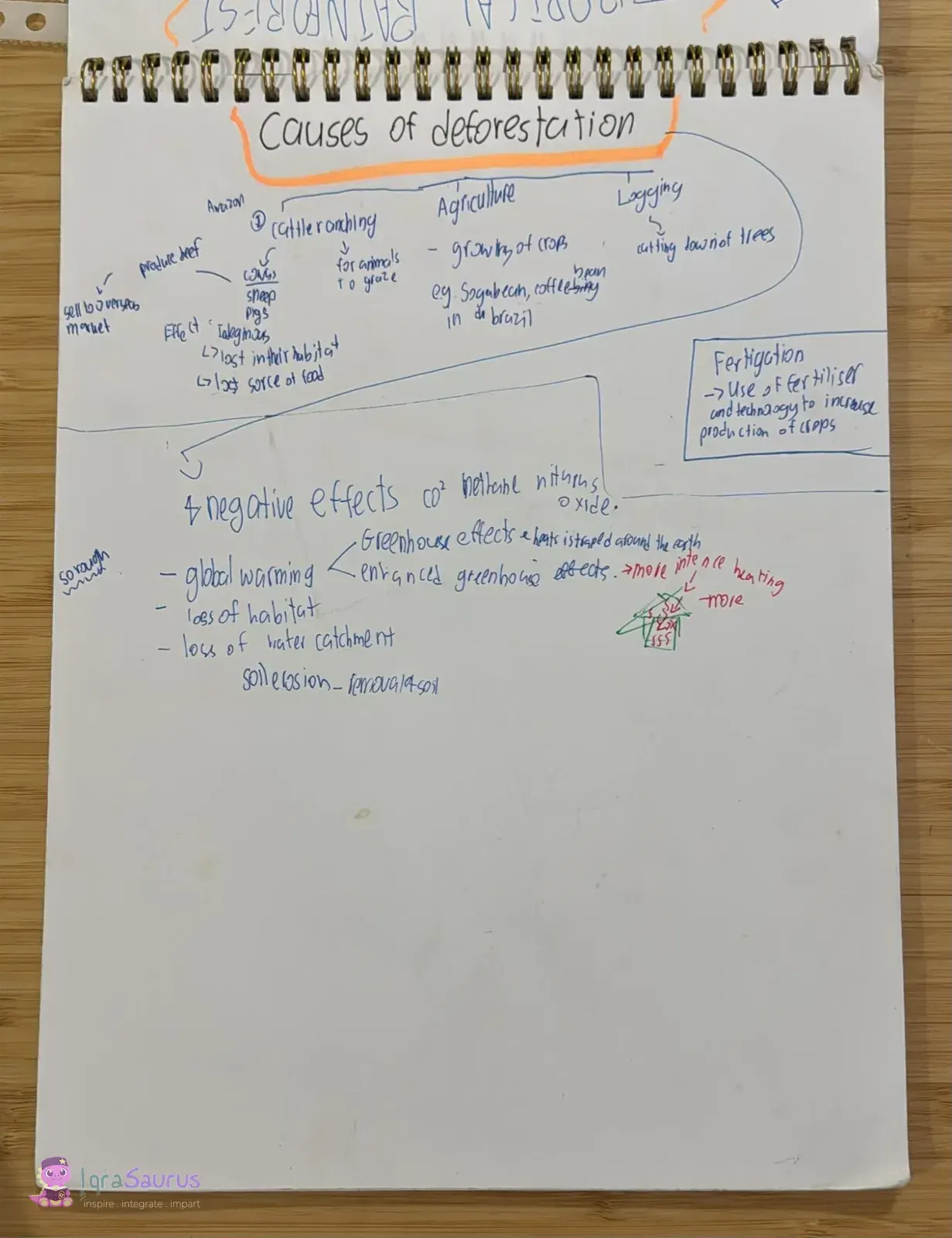
For deforestation he boxed the title in orange and drew arrows from the causes (cattle ranching, agriculture and logging) to the effects (global warming, loss of habitat, loss of water catchment and soil erosion). There is a little greenhouse sketched in the corner.
Design and Technology
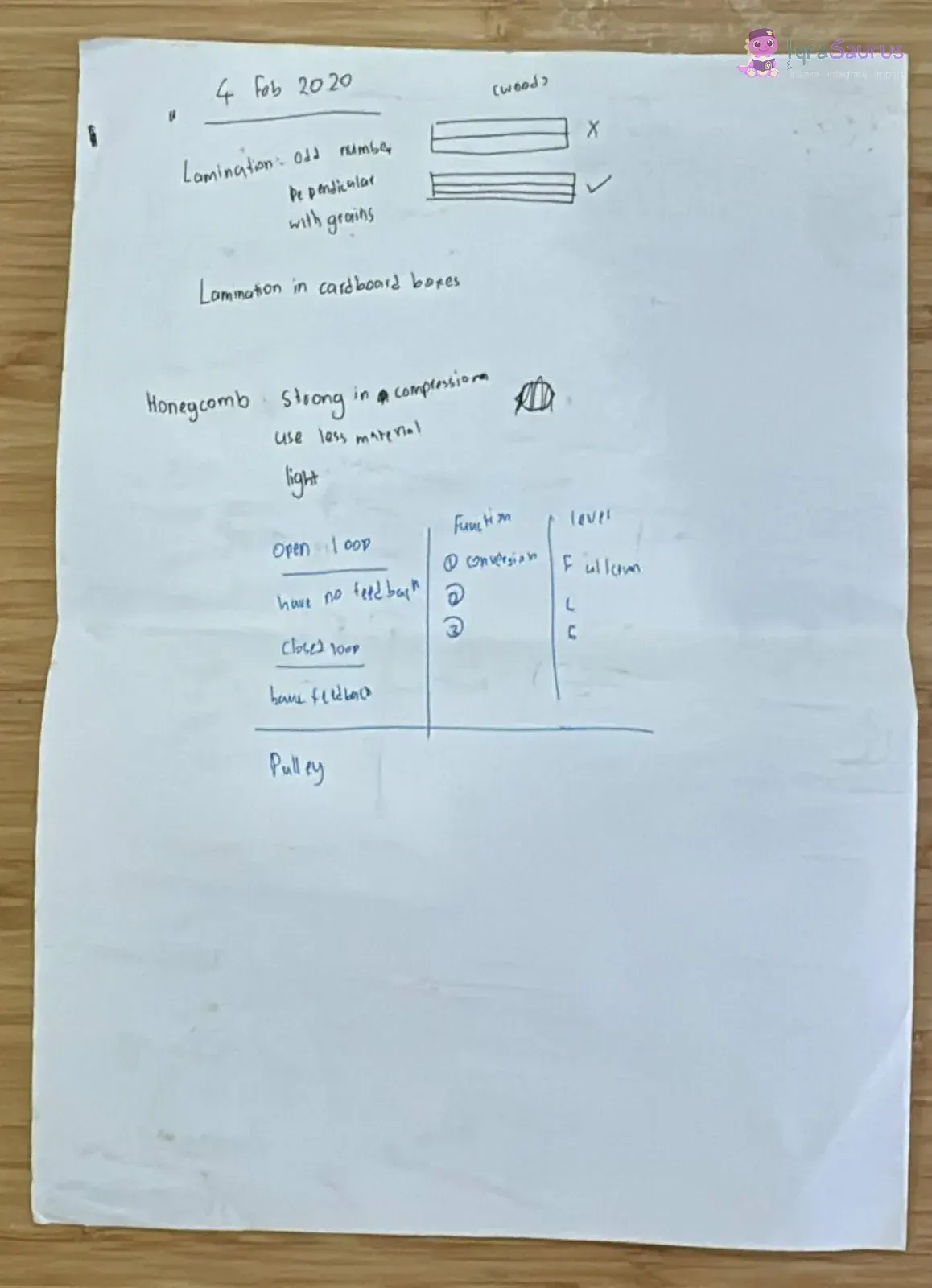
In February 2020, Syauqi was studying structures in Design and Technology. His notes on lamination, honeycomb structures and open and closed loop systems have small sketches beside each point.
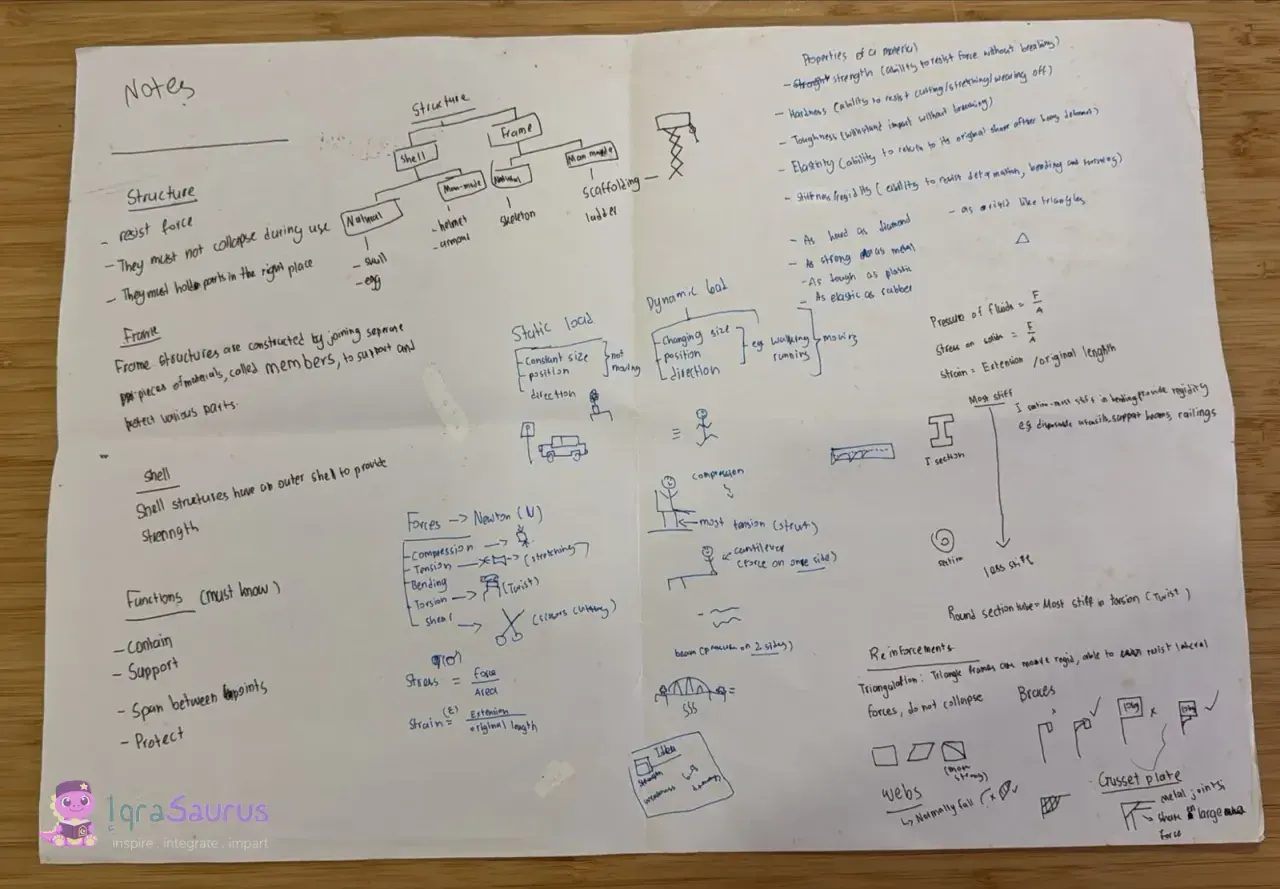
Then he put the whole topic onto one large sheet: shell and frame structures, natural and man-made, the forces of compression, tension, bending, torsion and shear, static and dynamic loads, the properties of materials, and ways to strengthen a frame with triangles and gusset plates. Stick figures stand on beams, and there are drawings of a bridge, a car and an I-section.
What a parent can try
For us, writing things out, drawing mind maps and staying curious are how the 4-I approach carries on into daily life, outside workshops and lessons. A child who maps a topic is investigating it, and the conversation afterwards is where it connects to everything else.
If you want to try this, give your child a plain notebook and let them fill it their own way. Then ask them to talk you through one page.