Parent questions
Should I teach surahs in order or by theme?
Order and themes do different jobs. Keep a steady track for reading and memorising, and explore themes at home.
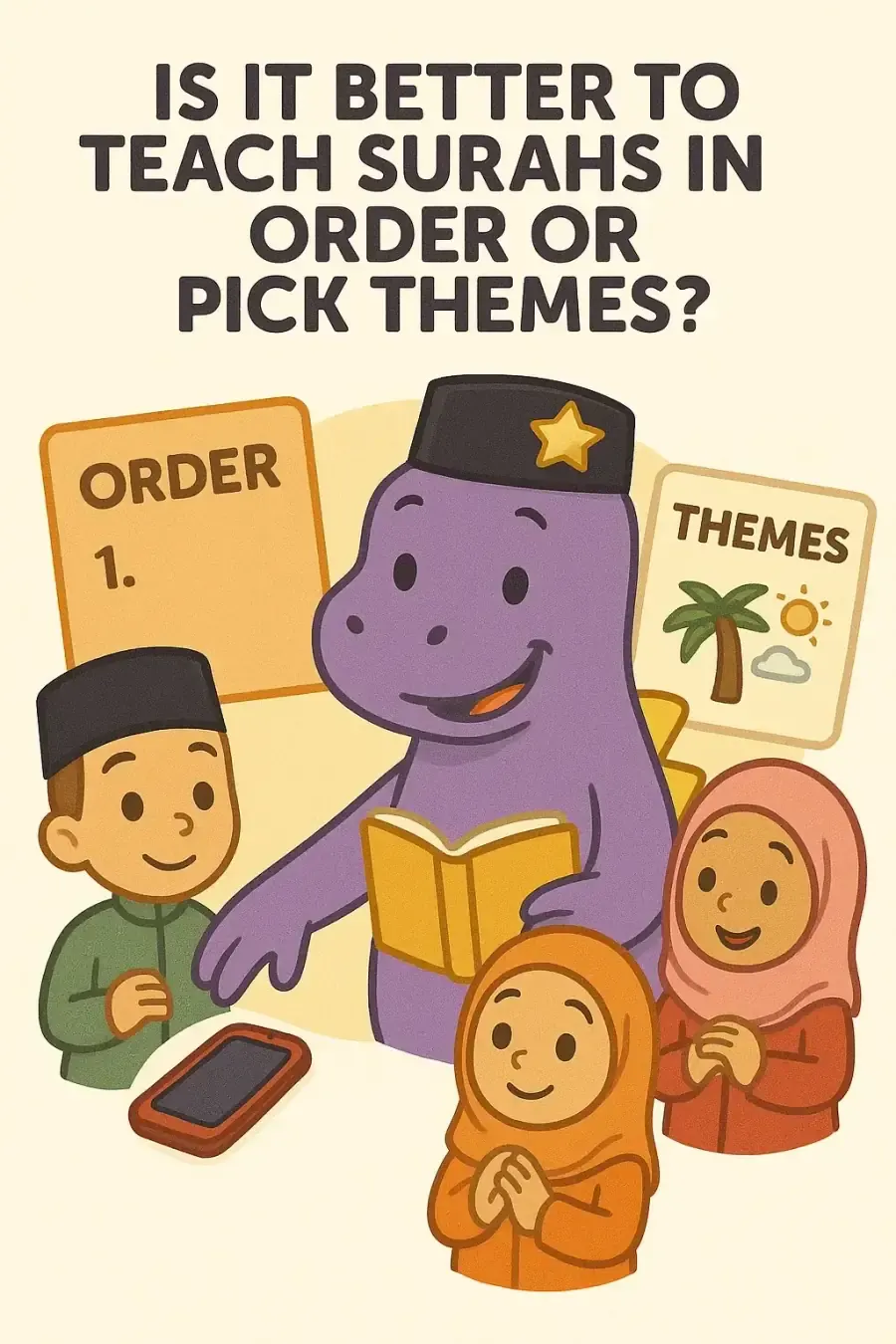
A parent asked us: should I go from Surah Al-Fatihah into the next surahs in mushaf order, or pick stories and themes that speak to my child? It feels like a choice between structure and relevance. It doesn't have to be.
Three different orders
The written order of the Quran, the historical order of revelation and the order of a beginner's memorisation programme are three different things. There is no general rule that a small child must memorise Al-Baqarah straight after Al-Fatihah. Many beginners learn Al-Fatihah and the shorter surahs first, because they are manageable and used in salah. Your child's teacher can guide the sequence.
Themes from the surah's own message
Theme-based reflection at home works differently. If your child is afraid at bedtime, you might explore the words of Surah Al-Falaq and Surah An-Nas, together with the established prophetic practices of seeking Allah's protection. If they love creatures, visit Surah Al-Fil or the bee in Surah An-Nahl. If they are learning to share, explore Surah Al-Ma'un with a reliable explanation and one real act of generosity as a family.
The safeguard is that a theme must come from the surah's actual message, not be laid on top of it. Surah Al-Fil recounts how Allah dealt with the army of the elephant; it is not a blanket promise that children will never face harm. Surah Al-Kawthar concerns the bounty Allah granted Prophet Muhammad ﷺ and worship devoted to Him, so it shouldn't be reduced to a general gratitude worksheet.
How we did both
At home we kept a steady track. Our Juz 'Amma poster from 2015 laid the surahs along a road from the Makkiah surahs to the Madaniah surahs, with a tree for each surah showing how many verses it has, and an apple or a star to colour in once it was memorised. It hung where everyone passed it every day.
Alongside that, our Bookcamps took one surah at a time and stayed with it for the whole programme: An-Naas, Al-Ma'un, Al-Fatihah. Each Bookcamp had its own workbook, with reading, numbers, art, doodling and reflection all drawn from that one surah.
Try a blended week
- Keep a steady recitation track with your child's teacher.
- Separately, take one theme and explore it at home: hear the verse, read a trusted explanation, tell a faithful story, then practise one related good action.
The formal track builds reading and memorisation. Home life connects what your child learns to their character and their day.