Parent questions
What are three things I must never do when introducing the Quran to my children?
Shame, constant testing and pressure to perform can make Quran time hard. Here is what to do instead.
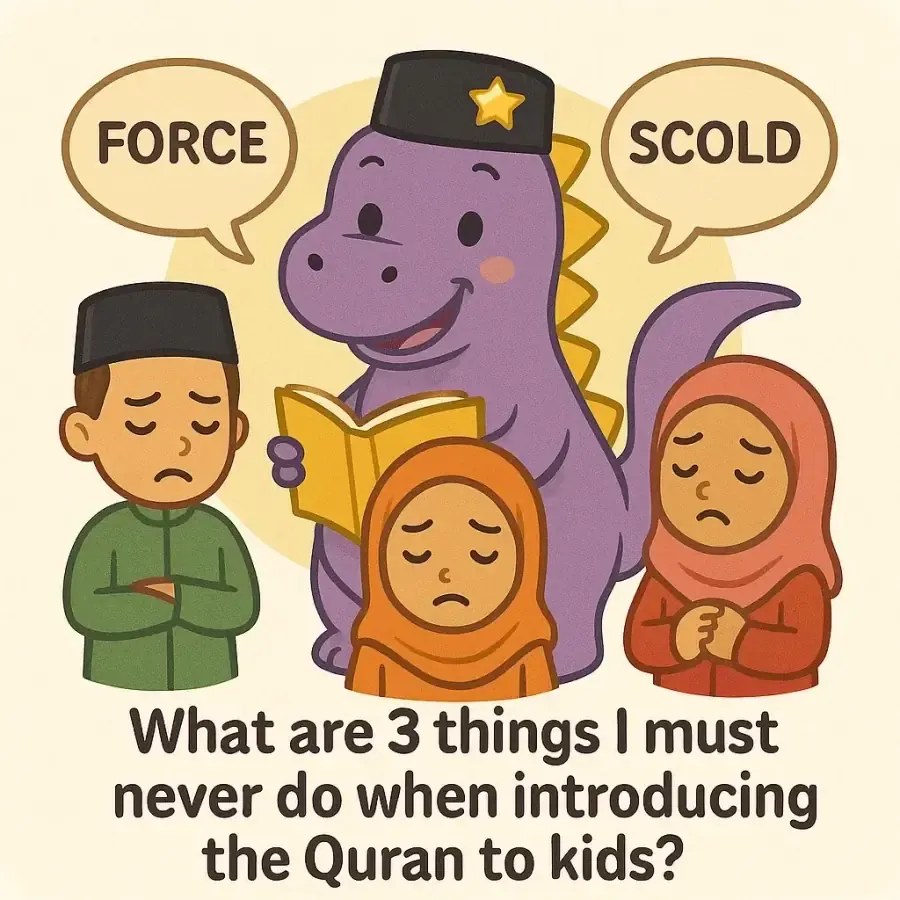
Some habits make Quran time harder for children than it needs to be. Here are three to avoid, and one caution behind them all.
1. Using shame to make a child recite
"Allah won't love you unless you memorise this tonight" is not a sound thing to teach. Islam does have obligations, accountability and reverence, and those must be taught accurately and in ways that suit a child's age. Correct your child kindly and clearly. Don't frighten them with religious claims you can't support.
2. Turning every Quran moment into an exam
Formal lessons, correction and assessment have a proper place. At home, also leave room for listening, questions and reflection. Ask your child to point out a word they recognise, or to retell a story after you have told it faithfully. Keep some structure without making every family moment a test.
3. Making recitation a performance
A child may happily recite a surah for relatives, and that can be a joy. Don't push them to perform when they are shy, and don't let their worth depend on applause or on being compared with cousins.
Behind all three
Never knowingly invent Quranic meanings, present made-up dialogue for prophets as fact, or pass off an unverified hadith as authentic. If you need to simplify, say that you are simplifying an explanation you have checked.
When something isn't working, change the format
We have tried many ways of helping our children memorise. One was a one-page "journey" tracker for Surah Al-Kafirun: Hilwaa shaded a small picture for each reading, and her older sister Nurin checked her. The note at the bottom says she was very excited but couldn't memorise ayah 3 yet. The tracker never went further than that page. It was one of many formats we tried, to find what would work for each child.
A reset
Make the session respectful, manageable and accurate. Recite a short passage, notice real effort, and invite one meaningful response. If you have been harsh before, apologise and change the pattern. The Quran deserves disciplined learning and merciful teaching.